

When Trademark Enforcement Collides with Brand Values
Trademark disputes are not often decided in two arenas: the courtroom and the court of public opinion. The ongoing litigation between outdoor apparel company Patagonia and environmental activist and drag performer Pattie Gonia, however, demonstrates how quickly a legal trademark dispute can evolve into a broader conversation about brand identity, activism, and corporate values.
The case has attracted special attention because both parties are recognized for their environmental advocacy. While the lawsuit centers on intellectual property rights, the public debate has focused just as heavily on whether aggressive trademark enforcement is consistent with a company's stated mission and values.
Patagonia filed an action after Pattie Gonia sought federal trademark protection for her name in connection with merchandise, marketing, and activism-related services. Patagonia argues that the use of a name that closely resembles its longstanding brand, and that its commercial use creates legal concerns and could lead consumers to believe there is an affiliation, sponsorship, or endorsement relationship between the parties, potentially diluting their highly recognizable brand.
The company is seeking only nominal monetary damages, in the amount of one dollar (plus attorney’s fees), but it has emphasized that protecting its trademarks is essential to preserving its ability to control its brand and prevent misuse by others. Understanding the precarious position of the company’s environmental values and activism being so closely aligned with the defendant’s, Patagonia outlined their reasoning in a recent public statement on their website.
Pattie Gonia, whose environmental advocacy has generated substantial fundraising and social media engagement, contends that the lawsuit threatens her ability to continue operating under the identity she has built over several years. She maintains that her name is a creative play on the geographic region of Patagonia and that much of her work incorporates parody and artistic expression. Pattie released their own statement in an open letter to Patagonia’s CEO, Board of Directors and Trustees asking that the suit be dropped and both parties focus their financial efforts on protecting the environment.
Consumer Confusion
At the heart of the federal trademark infringement claim, under 15 U.S.C. §§ 1114-1117, is the central question in many trademark disputes: whether consumers are likely to be confused about the source, sponsorship, or affiliation of goods and services. Pattie Gonia is expected to argue that consumers readily understand the distinction between a drag performer and a global outdoor apparel brand, reducing any meaningful risk of confusion.
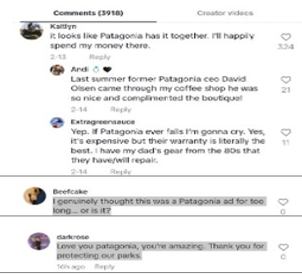
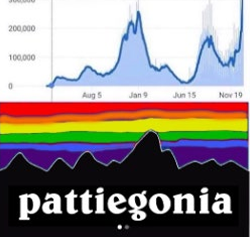
Patagonia will need to demonstrate that consumers encountering Pattie Gonia branded merchandise could reasonably believe it is connected to the Patagonia company. Evidence of actual marketplace confusion, if persuasive, can be particularly influential in these cases. In this age of social media, Patagonia didn’t have to look far for examples of consumer confusion, highlighting the following in their pleading:
Trademark Dilution
Patagonia has also raised violations of the Trademark Dilution Revision Act of 2006, 15 U.S.C. § 1125(c) . Unlike traditional infringement, dilution focuses on whether the distinctiveness of a famous mark is weakened by another party's use.
These claims often face a higher evidentiary burden because the trademark owner must demonstrate that the mark is widely recognized by the general public and that the challenged use harms the mark's uniqueness.
Parody and Free Expression
The role of parody has long played a part in trademark law. Patagonia has been aware of, and seemingly signed off on, Pattie’s persona as early as 2022; however, they did so with the understanding that the performer would not be creating merchandise.
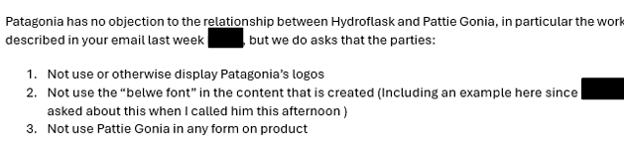
The two parties had previously met about Pattie’s name use and a memorialized understanding had been reached in 2022. Patagonia provided an excerpt from that email in the initial pleading:
Patagonia insisted:
“Pattie Gonia confirmed an understanding that she must refrain from selling PATTIE GONIA-branded products or using fonts or designs that copy, or are substantially similar to, Patagonia’s logos.”
However,
“The trademark application reflects Pattie Gonia’s departure from discrete use of a persona to engage in activism and confirms Defendants’ intent instead to launch a wide-ranging commercial enterprise.”
Courts have long recognized that parody can be a protected form of expression. However, the legal protection becomes less predictable when parody is used in connection with commercial products rather than purely artistic or expressive works.
Patagonia has repeatedly asserted that it must consistently enforce its trademark rights. They cite their 50+ year record of award-winning environmental activism and significant financial investments into ensuring that their products are produced in Fair Trade Certified Factories. Clothing is produced with certified organic sourced cotton to avoid the environmental impact of pesticides. Allowing other enterprises, whose supply chains are unknown, to use similar marks may threaten to diminish the reputation they have built.
Failing to challenge similar uses can also weaken future enforcement efforts. While trademark owners do have an interest in monitoring and protecting their marks, trademark law does not require a company to pursue every arguably similar use in every circumstance. Nevertheless, choosing not to take action when they perceive a risk could set a precedent that could invite additional third party uses.
Patagonia has spent decades cultivating a reputation as a purpose driven company committed to environmental causes. Pattie Gonia has built a platform around similar environmental advocacy goals. As a result, this litigation has generated criticism from consumers who view the dispute through the lens of shared values rather than intellectual property law.
This is not the first time that Patagonia has had to step in and prevent the dilution of their brand by others. They have taken action against organizations whose values are not in line with their own, including supporters of the oil industry PETROGONIA and paramilitary organization GATAGONIA.
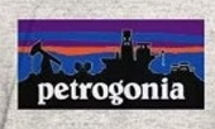

In this case, however, the two parties align in their mission to protect the environment, creating a potential for these legal decisions to create reputational consequences that extend far beyond the underlying claims. Even when a trademark owner has a legitimate legal basis for enforcement, stakeholders may evaluate the action against the company's public commitments and stated values.
This case has the potential to provide valuable guidance on the intersection of trademark protection, parody, activism, and commercial branding. Regardless of the ultimate outcome, the dispute serves as a reminder that intellectual property enforcement is rarely just a legal exercise. For modern brands, every trademark decision is also a communications decision.
As courts continue to balance trademark rights against creative expression, businesses should watch this case closely for its potential impact on future enforcement strategies and brand management practices, including lessons in public relations.
The attorneys at Renner Otto strive to be authorities in all matters concerning the ever-evolving landscape of Intellectual Property; however, the information provided on our website is not intended to be legal advice, nor does it create an attorney-client relationship.
Contact us for more information or for a complimentary consultation.